
Design baseline
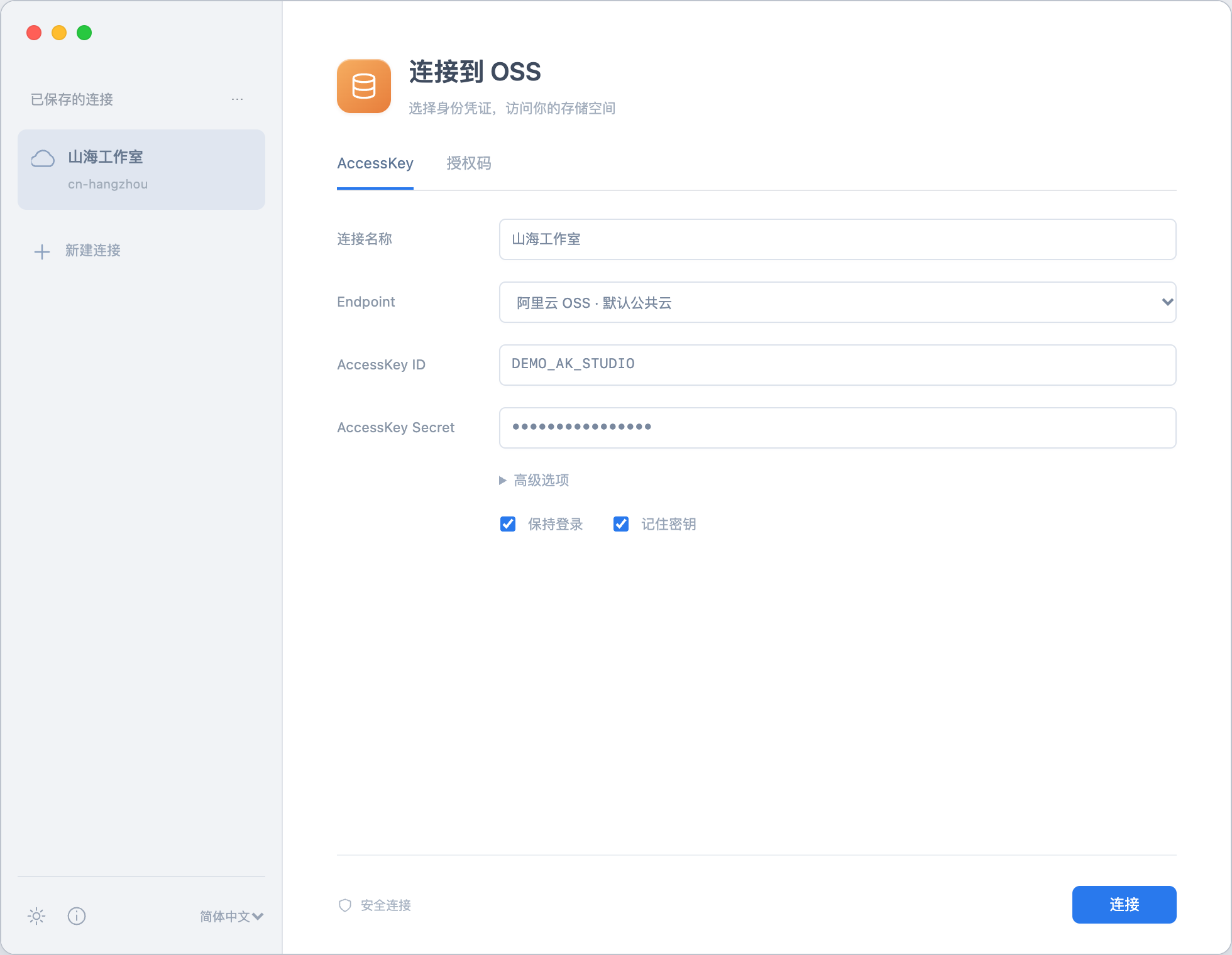
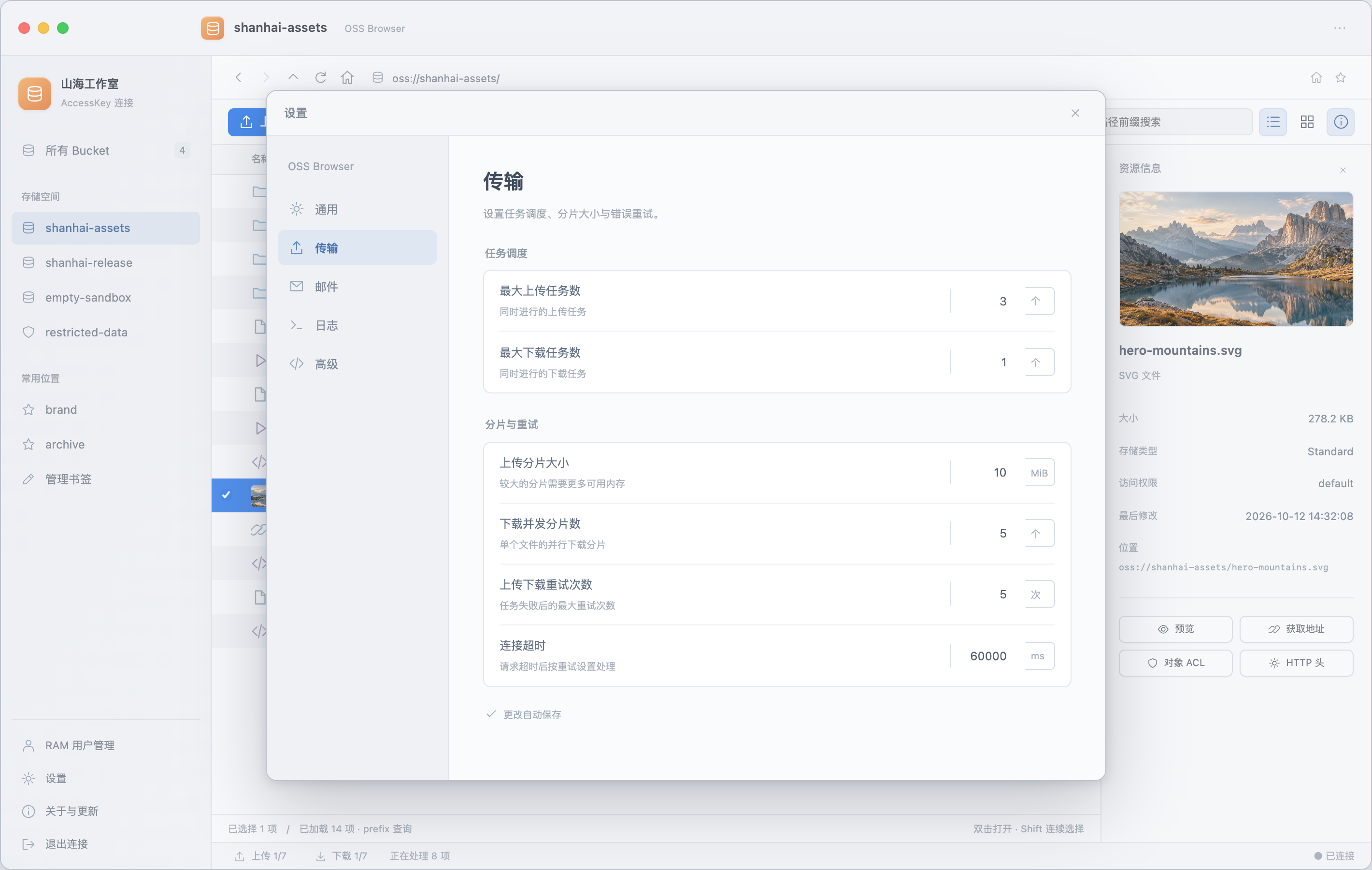
The UI is a redesign of OSS Browser as well as a Go rewrite. Design v2 is the visual and interaction baseline. The images below are design mockups, not screenshots of completed native features.
The approved UI refresh supersedes the layout details below: it uses a 208px workspace sidebar, 40px object rows, a 264px inspector and a dedicated transfers page. The original images remain historical mockups.
Workspace
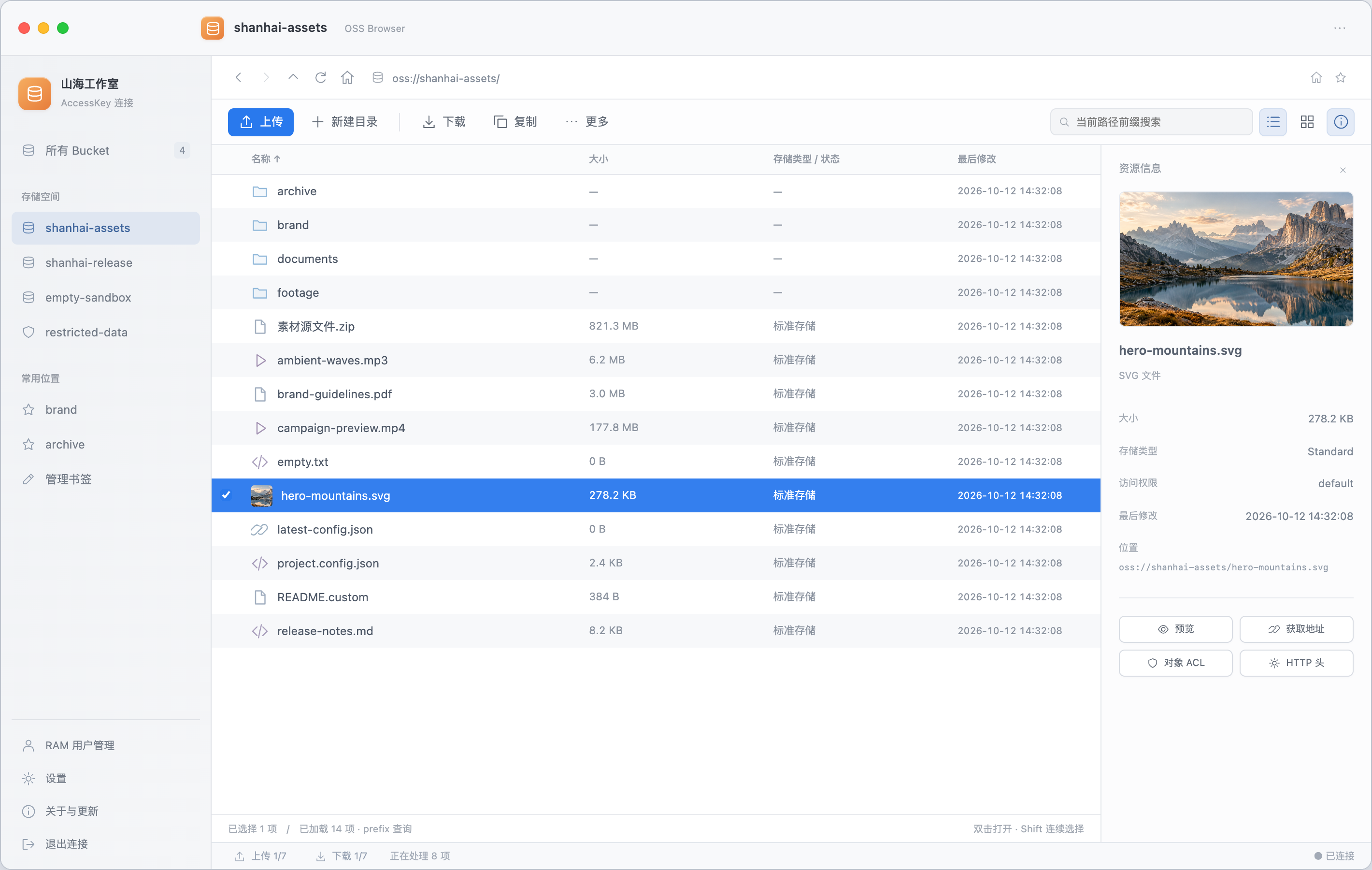
The target layout uses a native title bar, 218px navigation sidebar, path and action bars, compact object rows, a 280px details pane and an expandable transfer area.
Connection and settings
Shared design tokens
| Token | Light design |
|---|---|
| Main text | #343942 |
| Canvas | #f4f5f7 |
| Divider | #e3e5e9 |
| Primary action | #2979ed |
| Selection tint | #e7effc |
| Control radius | 6px |
| Main design size | 1420 × 900 |
| Connection design size | 980 × 760 |
| Row / header height | 35px / 30px |
The foundation uses native system fonts. Muted text is darkened for readability. Dark-mode colors are implemented in theme.go; platform scaling and font metrics determine native geometry.
Sources and scope
The design source is in design-v2 within the oss-browser-mygo-design bundle; complete screenshots are in its previews/all directory. Three representative images are checked into docs/public/design so this site builds without the design bundle.
The design's recorded upstream baseline is aliyun/oss-browser at 922153a; its MyGo baseline is 0.4.8. The design bundle's scene catalog, coverage matrix and native mapping remain the reference for later feature work.
Prototype data, simulated operations and browser-only controls are not production behavior. Native P01, P03 and P04 cover AccessKey / STS connections and browsing; P06 provides a configurable transfer queue with persistent file-transfer recovery in an expandable bottom panel, with direction filters; hiding it does not stop transfers. The connection page uses a separate 980 × 760 layout with a 224px saved-connections sidebar. The workspace uses a 56px title bar, 46px navigation and action bars, 35px alternating table rows, and a 280px details pane. Object tools use native dialogs for previews, metadata, ACL, sharing and mutation confirmation. Advanced scene families have native entry points with real service adapters and bounded list/grid/detail thumbnails. The review follow-up records completion of nine functional groups: independent auto-saving settings, object details, structured metadata, editable save-time Diff, confirmations and batch results, changed-source recovery, RAM results, diagnostic controls and staged automatic update downloads. The 110-scene ledger separates this implementation from UI fixtures, service tests and outstanding live acceptance. Exact visual parity remains subject to native layout and platform review.